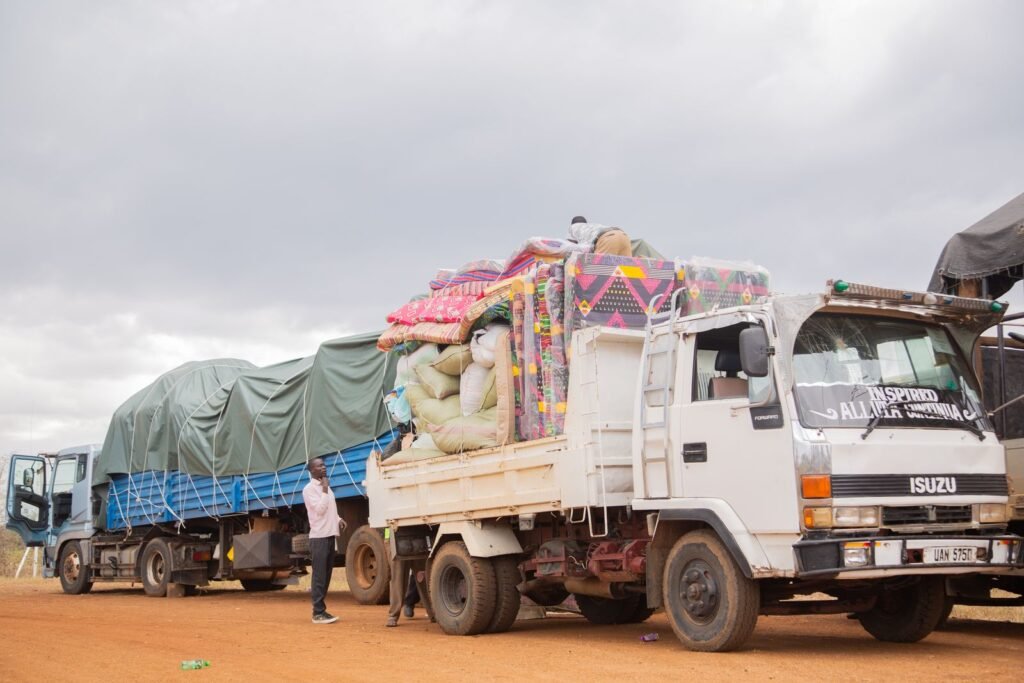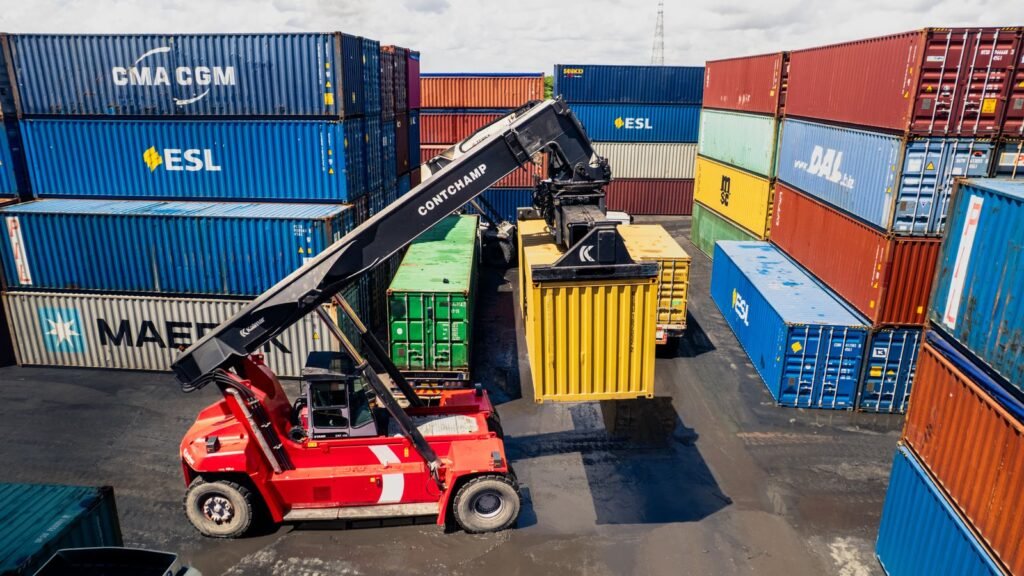
African logistics is expensive because it is fragmented, not because demand is missing. This guide matches the openings to your background, explains what went wrong with the first wave of logistics startups, and shows how to test an idea in 30 days.
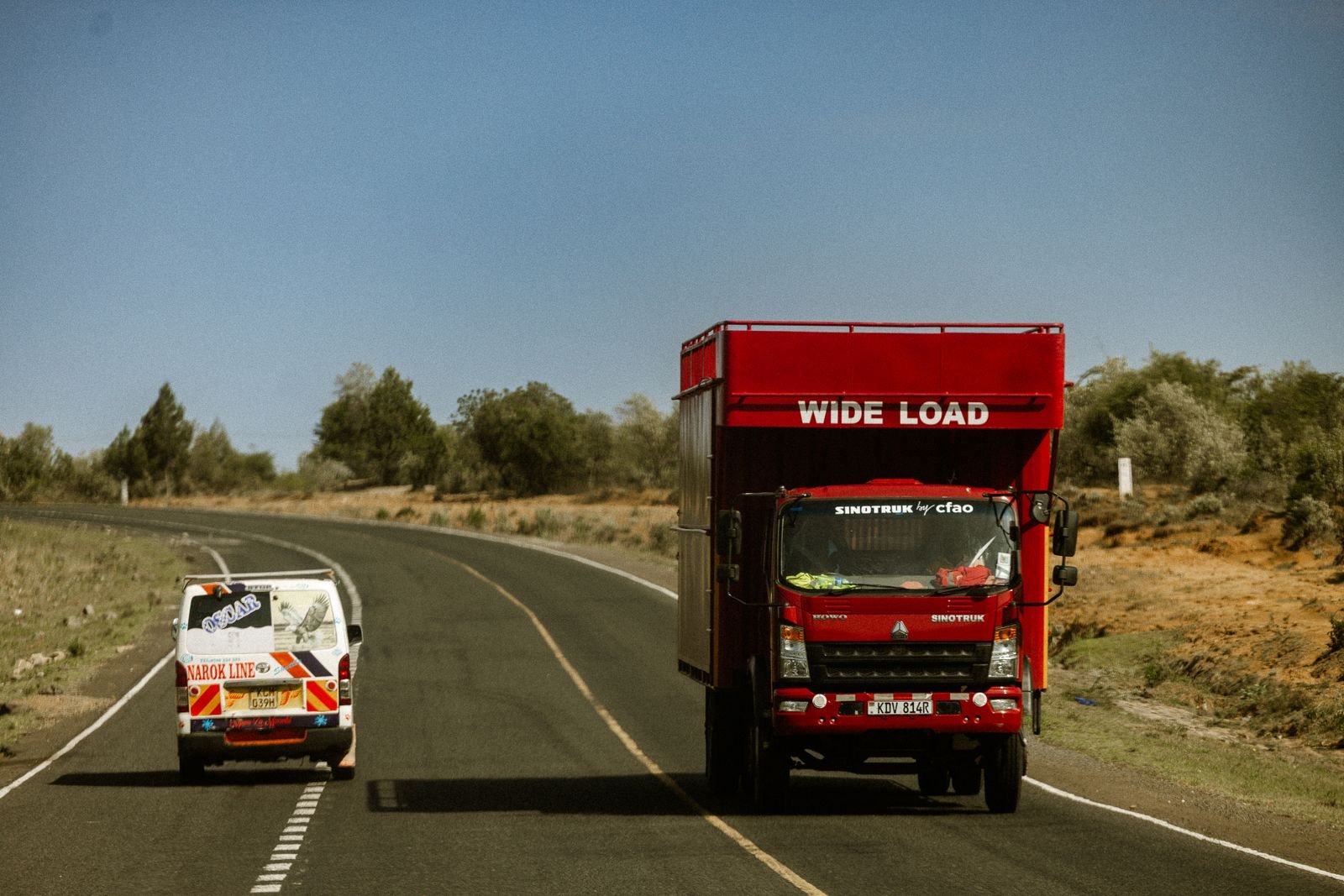
In this guide
Scaleup founder? If you already have customers and want new markets, partners or investors, read the African logistics market for scaleups instead.
What logistics business can you start in Africa?
The short answer
African logistics is expensive because it is fragmented, not because demand is missing. The best openings for a new founder fix the money flow (payment terms, credit) or the information flow (rates, capacity, documents). They need far less capital than trucks or warehouses. Pick the one closest to a problem you have lived, an industry you know or a customer you can reach.
- Moving goods in Africa usually costs several times more per tonne-km than in Europe, Asia or the Americas. The causes are coordination failures more than distance.
- The 2018–2022 wave of “Uber for trucks” startups mostly shrank or shut down. The survivors made money on finance and reliability, not on matching.
- Your starting position matters more than the size of the market. A clearing agent, a fleet dispatcher and a credit analyst should start on three different ideas.
- Prove one lane, one city or one customer by hand before you write software.
Why logistics, and why now
Logistics and transport overtook fintech as Africa’s most-funded startup sector in the first nine months of 2026: $780 million (36%) against $760 million (35%) (Tekedia, citing Africa: The Big Deal). Two companies drove most of it: Spiro, in electric mobility, raised $345 million and Moove $250 million, together about 76% of the sector total (Nairametrics). For an idea-stage founder, the headline matters less than the pain underneath it.
| Pain point | How it shows up | Why it persists | Opening |
|---|---|---|---|
| Fragmented trucking | Most trucks are owned by people with 1–5 vehicles, often old and uninsured | Low entry barriers, no access to fleet finance | Fleet aggregation, owner-operator financing, maintenance networks |
| Empty backhauls | Trucks return empty from ports and mines, and the shipper pays for both legs | Trade is unbalanced: imports flow inland, little flows back | Load matching on return legs, consolidation hubs inland |
| Broker layers | Shippers reach trucks through 2–4 informal brokers, each taking a cut | Trust is personal, and payment and credit run through brokers | Transparent marketplaces, but only if they also solve payment |
| Border and port dwell time | Days lost at borders, weighbridges and ports | Paper processes, inconsistent rules, informal payments | Clearing software, pre-arrival documentation, corridor visibility tools |
| Landlocked penalty | Uganda, Rwanda, Zambia, Malawi, South Sudan and the Sahel pay far more to reach a port | Cost of a transit country’s corridor, plus a second customs regime | Corridor services, bonded warehousing, rail–road intermodal |
| Working-capital squeeze | Shippers pay in 30–90 days, while drivers need fuel cash upfront | Thin SME balance sheets, weak credit data | Freight factoring, fuel credit, embedded finance |
| No addresses, cash-based last mile | Deliveries fail, COD is risky, returns are costly | Informal addressing, low card penetration | Pickup-point networks, address/geocoding layers, mobile money at delivery |
| Data scarcity | Nobody knows real lane rates, transit times or capacity | Fragmented, offline operators | Lane rate indices, visibility platforms, shared data utilities |
Why now. Founders do best when something has just changed and the incumbents have not adjusted yet. In African logistics, several things are changing at once:
- New systems. Nigeria’s B’Odogwu customs system is replacing NICIS II, and forwarders reported delays and demurrage during the rollout (Technology Times).
- New deadlines. The EU deforestation regulation applies to large and medium operators from 30 December 2026, so coffee and cocoa exporters need traceability now (EY; Ecofin).
- New infrastructure. The first copper and cobalt shipments ran on the Lobito Corridor in February 2026 (Engineering News). New rail terminals and port concessions reset who the incumbents are (see corridors and ports).
- Cheaper electric last mile. Electric motorcycle sales in Africa grew from under 1,000 in 2020 to about 70,000 in 2025 (Ecofin, citing the IEA).
How sure are these numbers? Logistics-cost figures such as “logistics = X% of product price” circulate with values from about 30% to 75%, from different years, lanes and methods. For country comparisons, use the World Bank Logistics Performance Index (latest edition 2023).
How to find your logistics startup idea
Most good startup ideas come from founders who have seen a problem up close. Accelerators such as Y Combinator and Antler give versions of the same advice: start from your own problem, an industry you know or a skill you have, and look for an insight other people do not have yet. Logistics rewards this more than most sectors, because the real problems are invisible from an office.
1. Start from a problem you have lived
Have you chased a 60-day invoice, lost a container to demurrage or watched a delivery fail three times? That frustration is a better starting point than a market report. Write down the last three times logistics cost you money or time, and who else suffers the same way.
2. Use the industry you know
People who have worked inside a forwarder, an FMCG distributor, a clearing agency, an exporter or a bank know where the money leaks out, who decides, and who pays. That knowledge is hard to copy. If you have it, look first at the openings closest to your old job.
3. Build on the skill you have
Different skills fit different openings:
- Software: information-flow tools that need little capital.
- Operations: managed services on one lane.
- Credit and finance: money-flow products (freight finance).
4. Start from a customer you can reach
In logistics, distribution is usually harder than the product. If your aunt runs a fleet of five trucks, your former employer ships cement on one corridor, or you know the clearing agents at Malaba, that access is your first customer. Several openings below start with exactly one anchor customer.
5. Look for a change that opens a window
A new rail terminal, a customs-system migration, a port concession or a regulation deadline forces companies to change how they work. During the change they need help, and incumbents are slow to give it.
6. Earn the insight if you do not have it
A strong team with no logistics background can still win, but should earn the insight before writing code. Ride a truck on the corridor, spend a week at a border post or work the dispatch desk of a courier. The detail you bring back (“truckers choose brokers who pay fuel upfront”) is what investors look for.
Which opening fits your background?
| If you are… | Look first at | Why it fits |
|---|---|---|
| A software engineer or product builder | Lane rate index, TMS for traditional brokers, COD reconciliation software, delivery-risk scoring, rules-of-origin software, temperature-monitoring software | Low capital; value comes from data and workflow |
| An operator from trucking, courier or FMCG distribution | Managed capacity on one profitable lane, return-leg load matching, returns for social sellers, pickup points in secondary cities | You know where reliability breaks and can run it by hand first |
| From banking, credit or insurance | Freight invoice factoring, fuel credit, goods-in-transit insurance, cross-border freight payments (freight finance) | Payment is the product; your credit judgement is the moat |
| A clearing agent or freight forwarder | Digital clearing agency, pre-arrival documentation, landed-cost calculators, small-trader formalisation | Licences and local know-how keep generalists out |
| From agriculture or export | Cold first-mile transport, temperature monitoring, EUDR traceability, air cargo consolidation for small exporters | You know the crops, the co-ops and the buyers’ rules |
| From property or construction | Micro-fulfilment units, retrofits of informal warehouses, pallet-storage marketplaces | You can find, fit out and lease space |
| From mobility or energy | Delivery-fleet electrification, swap stations outside capitals, battery second life | See our electric mobility guide |
Ideas to be careful with
Some ideas look obvious and have been tried many times. You can still build them, but only with a clear answer to why the last ones failed.
- “Uber for trucks.” A continent-wide matching app with no payment or credit layer. Take rates are thin, and truckers follow whoever pays fastest.
- Owning the whole chain early. Trucks, warehouses or inventory bought “to guarantee quality” turn a software company into a capital-heavy operator.
- Many countries before one works. Each country brings new tax, customs and labour rules.
- Growth bought with subsidised rates. It disappears when the funding stops.
What went wrong with Africa’s first logistics startup wave
The 2018–2022 wave of “Uber for trucks” and B2B distribution startups raised hundreds of millions of dollars. Most of them shrank, pivoted or shut down. The survivors share one trait: they made money on finance and reliability, not on matching alone.
| Company | Market | Peak model | What happened | Lesson |
|---|---|---|---|---|
| Twiga Foods | Kenya | Owned fleets, warehouses and sourcing for informal retail; raised over $180M | 2025: bought three FMCG distributors, cut over 300 roles, moved to an asset-light model (TechCabal) | Owning the whole chain creates fixed costs that thin retail margins cannot carry |
| Sendy | Kenya, Nigeria | Delivery → freight → fulfilment → B2B supply; raised about $26M | Ceased operations in 2023 and sold assets | Too many pivots across too many models; sustainable unit economics never reached |
| Kobo360 | Nigeria, West and East Africa | Trucking marketplace that paid drivers upfront; raised $79M | Cut operations when a bank partner pulled its credit line; in 2025 investors sold their shares to co-founder Obi Ozor, who took on ₦10 billion ($15.8M) of debt to attempt a revival (Dabafinance) | Paying drivers upfront while waiting 30–90 days for shippers only works with committed credit lines |
| Lori Systems | Kenya, Nigeria, Uganda | Marketplace plus managed freight | Raised $2M at a deep discount and moved to a model where banks fund drivers upfront and collect from cargo owners (Dabafinance) | Expanding across countries before one market was profitable spread the team thin |
| Trella | Egypt, Saudi Arabia, UAE, Pakistan | B2B trucking marketplace; $42M Series A led in part by Maersk | Still operating; added debt lines from ALMA/DFC to fund faster trucker payments | Debt to pay truckers fast is the core product; a large shipper (Maersk) as investor anchors demand |
Five lessons that recur:
- Matching is not the product, payment is. Truckers join for fast payment. Shippers stay for reliability. The marketplace is the delivery mechanism for working capital.
- Take rates are thin. Brokerage margins are typically single digits. Growth funded by subsidised rates disappears when funding stops.
- Asset creep kills. Buying trucks, warehouses or inventory to “guarantee quality” turns a software company into a capital-heavy operator.
- One market first. Each country brings new tax, customs and labour rules. Most failed multi-country expansions happened before the home market was profitable.
- Debt beats equity for float. Survivors fund payments with debt facilities from DFIs and banks, not with venture equity. See freight finance.
The gap left by shrinking marketplaces is real, but the winning shape is narrow and profitable, not continent-wide.
The openings, area by area
In the tables below, “capital need” and “competition” are our assessment from the companies and sources in this guide, not measured data. Company status changes quickly, so check each one before you contact or cite it.
Trucking and freight information

Fixing the money flow and the information flow needs far less capital than fixing the physical assets.
| Opening | Who pays | Capital need | Competition | Entry point |
|---|---|---|---|---|
| Return-leg load matching and consolidation | Shippers, transporters | Low | Medium | One corridor with a known imbalance, e.g. Mombasa–Kampala |
| Lane rate index and market data | Shippers, lenders, insurers | Low | Low | Publish rates for 5–10 key lanes |
| Managed capacity on profitable lanes | Large shippers (FMCG, cement, beverages) | Medium | Medium | One anchor shipper contract on one lane |
| TMS for traditional brokers | Brokers, small fleets | Low | Medium | Digitise informal brokers’ workflows |
| Fleet maintenance networks | Owner-operators | Medium | Low | Service hubs at truck stops on one corridor |
| Buying distressed platforms or their data | Acquirers | Medium | Low | Customer lists and carrier networks of shrinking players |
First step: be the broker for one lane by hand. Book ten loads for one shipper and pay the truckers yourself, on time. Then you know the real rate, the real payment days and what software would save.
Last mile and e-commerce delivery

Delivery, not demand, is the main barrier to closing an online sale in Africa. Landmark-based addresses and pay-on-delivery drive high refusal and return rates, so a failed delivery costs the merchant logistics twice for no revenue (Practical Ecommerce).
The benchmark to beat. Jumia cut its 2025 fulfilment cost per order by 12% to about $1.97, mainly by moving volume to pickup and drop-off points (Practical Ecommerce). By Q2 2026, 75% of its shipped packages went through pickup stations. It left South Africa and Tunisia in 2024 and Algeria in early 2026, and confirms its target of adjusted EBITDA breakeven in Q4 2026, backed by a $50 million raise that includes $25 million from IFC (Jumia Q2 2026 results; ITWeb). Jumia Logistics also delivers for third parties, so it is a competitor and a possible partner.
Fulfilment players now score each order’s delivery risk before dispatch and send WhatsApp confirmations to risky buyers, cutting refusals (Practical Ecommerce). Temu and Shein add parcel volume and price pressure, so local players compete on reliability and returns.
| Opening | Who pays | Capital need | Competition | Entry point |
|---|---|---|---|---|
| Pickup-point networks in secondary cities | Marketplaces, couriers | Low–medium | Medium | Agent shops in 2–3 secondary cities |
| Returns and reverse logistics | Marketplaces, brands, social sellers | Medium | Low | Returns handling for Instagram and WhatsApp sellers |
| Cash-on-delivery reconciliation software | Couriers, sellers | Low | Medium | Integrate with mobile money in one market |
| Delivery-risk scoring and order confirmation | Sellers, couriers | Low | Low | WhatsApp-based confirmation API |
| Address and geocoding layer | Couriers, marketplaces | Low | Medium | API for one city’s deliveries |
| Local 3PL for Chinese platforms’ in-country stock | Temu/Shein-type sellers | Medium | Medium | South Africa, then Nigeria |
First step: sign up five WhatsApp or Instagram sellers and run their confirmations and returns by hand for a month. Their failed-delivery rate before and after is your pitch.
Cold chain and agri-logistics
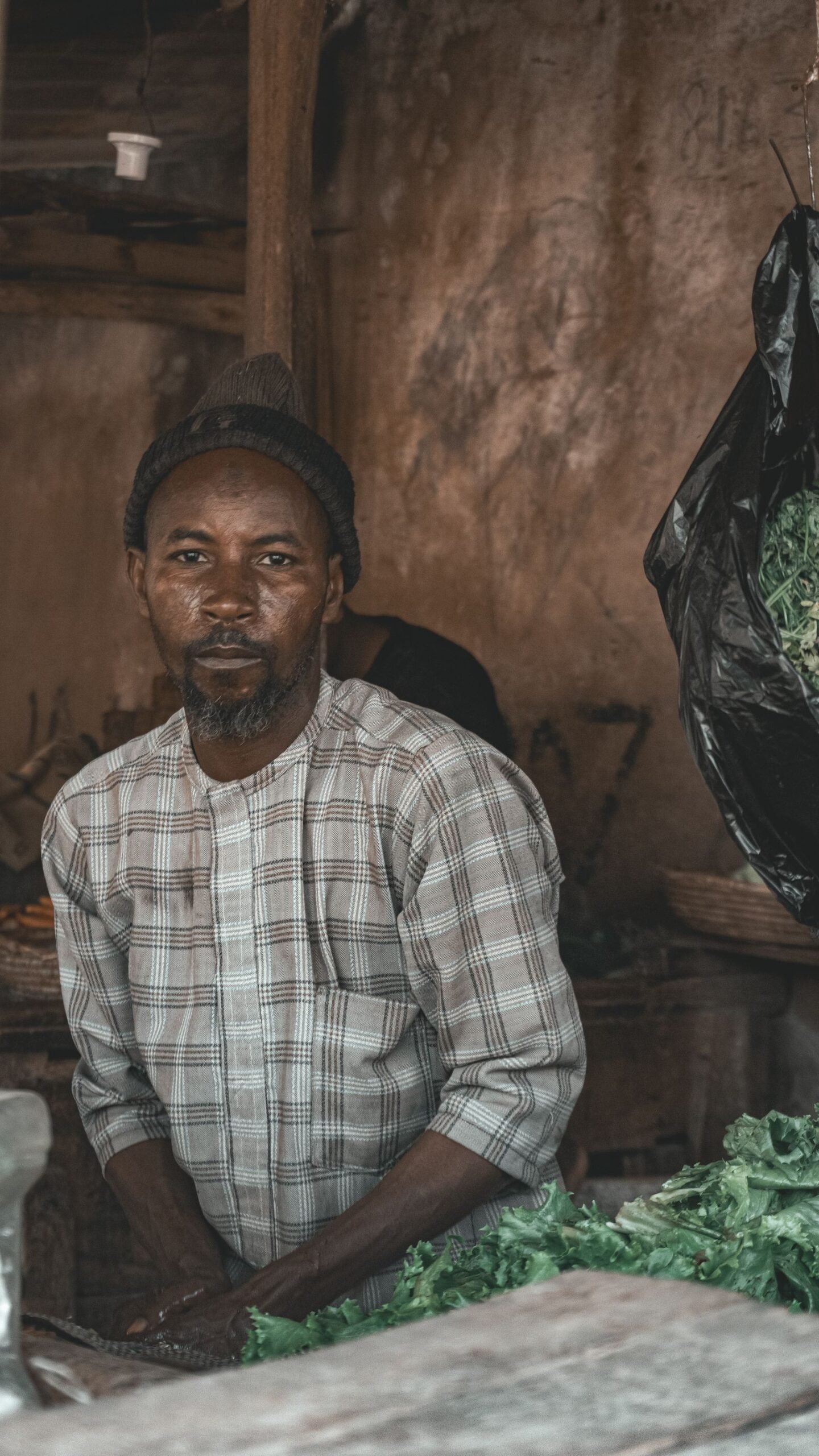
Only about 5% of Africa’s fresh produce passes through a cold chain, and 30–50% of it is lost after harvest (News24, citing Empower Africa). Post-harvest losses run at 30–40% against a global average of about 14% (FAO, via Food Business MEA). The winning model so far is decentralised, solar-powered cooling sold as a service, not large central cold stores.
| Model | How it makes money | Example operators | Who it serves |
|---|---|---|---|
| Pay-per-crate solar cold rooms at markets | Daily fee per crate stored | ColdHubs (Nigeria), AkoFresh (Ghana) | Market traders, mostly women, smallholders |
| Solar freezers on PAYG or lease-to-own | Instalments; BNPL on the asset | Koolboks (Nigeria/France; $11M Series A Sep 2025, 10,000+ units in 25 countries) | Fish traders, food vendors, shops, clinics |
| Cooling-as-a-Service for exporters | Usage fee; investor owns the asset | InspiraFarms (Kenya, Zambia, Zimbabwe, Ghana; backed by InfraCo Africa) | Horticulture and protein exporters |
| Farmer-cooperative cold storage | Storage fees plus aggregation and offtake | SokoFresh (Kenya, 7,000+ farmers) | Smallholder co-ops |
| Refrigerated transport | Per-trip or rental | AkoFresh refrigerated tricycles (pilot 2025) | First mile from farm to market |
Cold rooms at markets are the most crowded part. The links around them are thinner:
| Opening | Who pays | Capital need | Competition | Entry point |
|---|---|---|---|---|
| Cold first-mile transport (refrigerated tricycles, small reefers) | Farmers, aggregators, traders | Medium | Low | Pay-per-use runs between farms and existing cold rooms |
| Temperature monitoring and compliance software | Exporters, 3PLs | Low | Low | Exporters selling to EU buyers |
| Maintenance and spare-parts networks | Cold-room and freezer owners | Low | Low | Service contracts with existing cooling-as-a-service operators |
| Pharma and vaccine cold chain | Distributors, health programmes | Medium | Medium | GDP-compliant last mile in one country |
| Reefer trucking with temperature data | Exporters, retailers, pharma | High | Low | Contract with one exporter cluster |
How sure are these numbers? The loss figures come from FAO and sector estimates and vary by crop and country. Treat them as orders of magnitude.
Customs, clearing and cross-border trade
Customs and border procedures are where African shipments lose the most time. An importer usually hires a licensed clearing agent, who lodges the declaration, pays duties through a bank and coordinates inspections by customs, standards bodies and port health. Each handover is a delay point, and demurrage builds while the container waits.
Countries are replacing legacy systems with national single windows, and each changeover creates a period when agents, forwarders and importers need help:
| Country / bloc | System | Status | Opening |
|---|---|---|---|
| Nigeria | B’Odogwu (Unified Customs Management System), replacing NICIS II | Piloted at PTML, extended to Apapa in April 2026; forwarders reported delays and demurrage during rollout (Technology Times) | Agent tooling, document pre-checks, demurrage tracking during migration |
| Kenya | KenTrade single window plus the Integrated Customs Management System | Mature, widely used | Integrations for forwarders and importers |
| East African Community | Single Customs Territory and Regional Electronic Cargo Tracking System | Clears at first port of entry for transit goods | Transit visibility and bond management |
| EAC and COMESA | Simplified Trade Regime for small traders | Lets small consignments cross with simplified documents | Onboarding and compliance services for small traders |
Around half of intra-African cross-border trade is informal, by an older FAO estimate (FAO). Women make up most of these traders. Most of this trade is not illegal; it happens because the formal route is too slow, costly or hard to use.
| Opening | Who pays | Capital need | Competition | Entry point |
|---|---|---|---|---|
| Digital clearing agency (licensed agent plus software) | Importers, e-commerce sellers | Low–medium (licence) | High (many small agents) | One port, one cargo category |
| Pre-arrival documentation software | Forwarders, importers | Low | Medium | Agents struggling with system migrations such as B’Odogwu |
| Duty and landed-cost calculators | Importers, cross-border sellers | Low | Low | API for marketplaces and forwarders |
| Small-trader formalisation | Small traders, co-ops | Low | Low | Borders using the EAC/COMESA Simplified Trade Regime |
| Border-post services (staging, appointments, driver services) | Transporters, border authorities | Medium | Low | One chronic bottleneck: Malaba, Busia, Beitbridge or Seme |
First step: spend two days at one border post or port gate. Count where trucks wait and why, and talk to ten agents and drivers. Clearing know-how is local, so start at one port or border and expand outward.
Warehousing for small businesses
Modern Grade A warehousing is scarce outside a handful of metros, and most storage is informal: converted buildings with low ceilings, poor floors and no racking (All Business Africa). Large Grade A parks are a game for DFI-backed developers (see warehousing in the market guide). The middle market and the software layer are open:
| Opening | Who pays | Capital need | Competition | Entry point |
|---|---|---|---|---|
| Multi-tenant micro-fulfilment space (50–500 m² units) | E-commerce sellers, SMEs | Medium | Low | One building in Nairobi or Lagos |
| Retrofit of informal warehouses | Warehouse owners | Medium | Low | Racking, flooring, fire safety and WMS package |
| Pallet storage marketplace | Shippers, warehouse owners | Low | Low | Pool spare capacity in existing warehouses |
| WMS for informal and mid-size warehouses | Warehouse operators | Low | Medium | Mobile-first stock tracking |
Electric delivery fleets
Switching courier fleets to e-bikes, financing riders and building swap stations outside capital cities are real openings. Kenya’s charging and swap stations are about 90% in Nairobi (WeeTracker). We cover the economics, the operators and policy by country in electric mobility startups in Africa.
Payments, credit and insurance
The survivors of the first wave live on finance: freight factoring, fuel credit and paying truckers fast. If you come from banking or credit, start with our guide to freight finance in Africa.
How to test a logistics idea in 30 days
Before you raise money or build software, prove that someone will pay.
- Go where the problem is. Talk to 20 people in the place where it happens: the border post, the inland depot, the market, the dispatch office. Ask what they did the last time it went wrong and what it cost them.
- Do the job by hand. Be the broker for one lane, run confirmations for five sellers, or rent one cold room and fill it. Manual work shows you the real process.
- Get a commitment. A paid pilot, a signed load or a letter of intent from an anchor customer is worth more than any survey.
- Track the numbers investors will ask for, from the first customer:
- Contribution margin per load, per drop or per crate.
- Payment days: how long until you are paid, and how long until you pay drivers.
- Return-leg fill, utilisation or failed-delivery rate, whichever fits your model.
- Repeat customers in month two.
- Check the licence. Clearing agents, lenders of record, insurance intermediaries, bonded warehouses and pharma cold chains need permits. Find out what yours needs before you sign a customer.
- Size your slice, not the continent. Trucks or parcels per day on your lane or in your city × price × a realistic share. Corridor and port data are usually more reliable than continental reports (market sizing).
Team shape. Most openings need an operator who knows the ground, a builder, and, for money-flow ideas, someone who understands credit. If one is missing, start with our guide to finding a technical co-founder or co-founder matching.
How to fund a logistics startup
The route depends on what the business owns and how it earns, more than on its stage:
| Route | Typical providers | Best fit | What unlocks it |
|---|---|---|---|
| Asset-backed debt | DFIs, climate and blended-finance funds | Fleets, e-bikes, warehouses, cold rooms, receivables | A clean repayment and utilisation data room |
| Venture equity | Africa-focused and global VCs | Software and asset-light platforms | Proven unit economics on one market or lane |
| Strategic investment | Shipping lines, OEMs, platforms, Chinese suppliers | Companies that bring them demand or distribution | Commercial contract first, equity second |
| Grants and accelerators | Climate and energy grant programmes; accelerators in Africa with a logistics or climate focus | Early-stage and climate-linked ideas | Pilot results and impact metrics |
Who funds logistics, and how much, is covered in the market guide. If you plan to apply to a programme, see how to get into an accelerator.
Where Revise fits
Revise Launch is our four-month track for idea-stage founders with an MVP or first users. It covers the founding team, problem and customer discovery, the MVP and your first paying customers, which is the sequence this guide describes for logistics. It costs 500 USD + VAT per founder or 1,000 USD + VAT per team, and we take no equity.
Already moving freight for paying customers? Revise Scale is for companies with traction. It is coming soon, and you can request information now.
Building in logistics?
Applying to Launch is free and takes about five minutes. A person reads every application.
Frequently asked questions
What logistics business can I start in Africa with little capital?
Information-flow and money-flow businesses need the least capital: lane rate data, broker software, COD reconciliation, delivery-risk scoring, pre-arrival customs documents and landed-cost calculators. Start on one lane, one city or one border.
Is "Uber for trucks" still a good idea in Africa?
Only with a payment or credit layer. The 2018–2022 marketplaces mostly shrank or shut down because matching alone earns thin, single-digit margins. Truckers follow whoever pays fastest.
How do I find a logistics startup idea?
Start from a problem you have lived, the industry you know, the skill you have or a customer you can reach. Then look for a recent change, such as a new customs system, rail terminal or regulation, that forces companies to work differently.
Which logistics startups failed in Africa, and why?
Sendy shut down in 2023 after too many pivots. Twiga cut over 300 roles and moved to an asset-light model in 2025. Kobo360 cut operations when a bank pulled its credit line, and Lori now relies on banks to fund drivers. The common thread: cash tied up in payment terms.
Do I need a licence to start a logistics business in Africa?
Often, yes. Clearing agents, lenders of record, insurance intermediaries, bonded warehouses and pharma cold chains need licences, which differ by country. Check before you sign your first customer.
How should I fund an early logistics startup?
Software and asset-light models suit venture equity once one lane or city works. Fleets, cold rooms and receivables suit asset-backed debt, which needs clean repayment data. A commercial contract usually comes before a strategic investor.
Keep reading
Sources
All links accessed in October 2026. Company status and figures change quickly; check before you act on them.
- Africa: The Big Deal, via Tekedia and Nairametrics
- World Bank, Logistics Performance Index
- Customs: Technology Times, IT Edge News, FAO on informal trade
- EUDR: EY, Ecofin
- Lobito: Engineering News
- E-mobility: Ecofin, citing IEA, WeeTracker
- Marketplaces:
- Twiga: TechCabal and TechCabal
- Sendy: Techpoint
- Kobo360: Dabafinance
- Lori: Dabafinance
- Trella: Techloy
- Last mile: Practical Ecommerce, Jumia Q2 2026 results, ITWeb
- Cold chain:
- Warehousing: All Business Africa

Rebecka Hald writes about startups, accelerators and early-stage funding in Africa for Revise. Her guides look at what programmes and investors actually offer founders, and what it takes to get from idea to first paying customers.
Revise guides are fact-checked and every source is linked. We update them when programmes, terms or numbers change.