
An impact investor wants a financial return and a measurable social or environmental result from the same investment. In Africa, these investors have shaped startup funding for years. This guide explains who they are, who is active now, and what changes for a founder who raises from one.

In this guide
What is an impact investor?
The short answer
An impact investor puts money into a company or fund with the intention of creating a positive, measurable social or environmental result alongside a financial return. It is not charity: 79% of impact investors surveyed by the GIIN target risk-adjusted, market-rate returns.
- They include development finance institutions (DFIs), impact venture funds, foundations and family offices. Each behaves differently.
- Most early-stage founders will raise from an impact fund or an impact-minded angel, not directly from a DFI. DFIs often invest through those funds.
- Expect normal investor questions plus impact targets, reporting and stricter environmental, social and governance checks.
- The money is shifting. DFIs fell from 45% of African venture fundraising in 2022–2024 to 27% in 2025.
Three ideas separate impact investing from ordinary investing: the intention to create the result, an expected financial return, and measurement of what actually changed. Without measurement, a company can only claim impact. In the same GIIN survey, 62% of investors named “impact washing”, where impact claims go beyond the evidence, as a challenge for the industry.
The five kinds of impact investor
| Type | What it is | How it usually invests | What it means for you |
|---|---|---|---|
| Development finance institution (DFI) | A government-backed investor, such as IFC, BII, Norfund or Proparco | Large equity and debt, and commitments to venture funds | Usually too large for a first round, but may back your investors |
| Impact venture fund | A fund that raises from DFIs, companies and others, then backs startups | Equity, sometimes with debt or grants alongside | The most realistic route for a venture-style startup |
| Foundation or philanthropic investor | An organisation using charitable or mission money | Grants, patient equity and low-cost loans | Can take risks others will not, and may accept lower returns |
| Family office | A private investor managing a family’s wealth | Equity or loans, often with personal priorities | Flexible, but found mostly through introductions |
| Blended finance vehicle | A structure where low-cost public or charitable money reduces risk for private investors | Layered fund or deal structures | You may never see the structure, but it can explain the fund’s terms |
Returns differ by type. The GIIN’s 2025 survey found that investment managers put 96% of their impact capital into market-rate investments, family offices 80% and foundations 73%. DFIs put only 11% there, with 77% going to returns below but close to market rate.
The label does not settle it. Plenty of investors back African companies with clear social benefits and never call themselves impact investors. Others use the label loosely. Ask how they define and measure impact, and what happens if a company misses its targets.
Impact investors compared with VCs, angels and grants
| Impact investor | Commercial VC | Angel | Grant funder | |
|---|---|---|---|---|
| Main goal | Return and measured impact | Large financial return | Return, often plus personal interest | Programme or mission results |
| Do you give up equity? | Often, but debt and other structures exist | Yes | Usually | No |
| Reporting | Financial and impact | Financial | Light, by agreement | Detailed, tied to the grant |
| Extra checks | Environmental, social and impact | Mainly commercial and legal | Varies | Eligibility and use of funds |
| Best suited to | Companies whose growth produces the impact | Companies that can grow very large | First cheques and early help | Early testing and public-good work |
This table is our summary. Individual investors vary, so check each one’s terms.
Why impact investors matter so much in Africa
Three things make this capital unusually relevant on the continent.
They have helped build the venture market. AVCA calls DFIs “historically the backbone” of African venture fundraising. Novastar’s $147 million third fund shows how this works: its backers include Norfund, Swedfund, Proparco and BII, alongside Japanese companies. So a startup can take “ordinary” venture money that started out as development money.
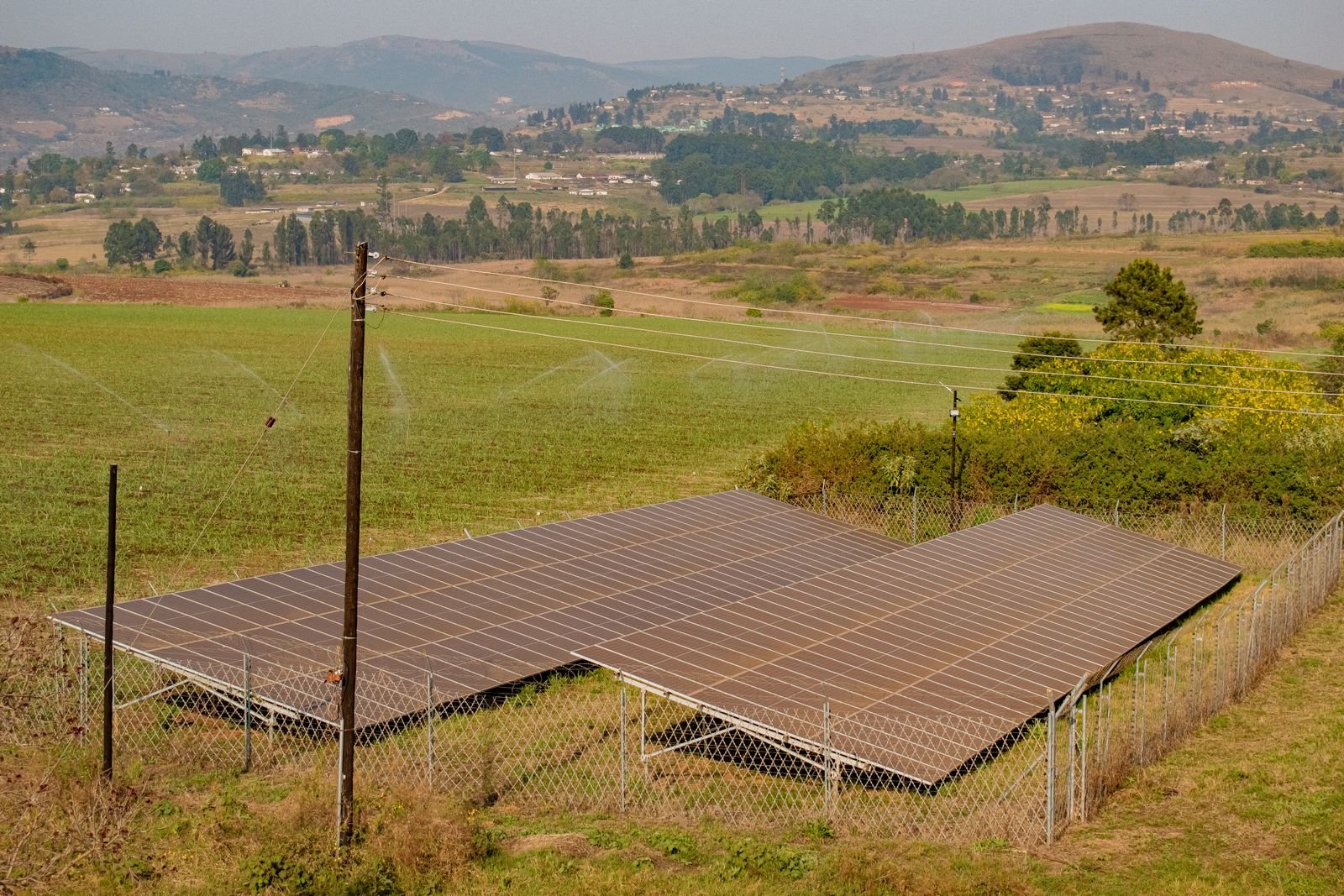
The business and the impact often overlap. Selling solar power to homes without a grid connection, or inputs and market access to smallholder farmers, is both the revenue model and the social result. That is why energy, agriculture, financial inclusion and mobility come up so often in impact portfolios.
Early-stage money is tight. African startups raised $1.4 billion in the first half of 2026, down 6% on a year earlier, according to Africa: The Big Deal, as fewer early-stage companies raised. The number of startups raising between $100,000 and $1 million fell 44%. Investors willing to accept longer timelines or mixed structures can matter more when other money is scarce.
What is changing: less foreign DFI money, more African capital
If you read older guides, this is the part that has moved. AVCA’s 2025 venture report shows:
- DFIs fell to 27% of African venture fundraising in 2025, from 45% across 2022–2024.
- The drop came mainly from international DFIs. African DFIs made up 63% of DFI capital raised in 2025.
- African investors became the largest group, at 45% of fundraising.
- European investors fell to 21%, from 70%.
Blended finance shows a similar pattern. Convergence counted $25.8 billion across 181 deals worldwide in 2025, while financing to sub-Saharan Africa fell 46% to $4.6 billion, and the region lost its lead. One year does not make a permanent trend: AVCA notes DFI numbers could recover as larger funds reach their final close.
New money is still arriving. In May 2026, the Africa Finance Corporation approved up to $100 million for African technology funds, starting with $25 million for Lightrock Africa and $15 million for Future Africa. In April 2026, BII set out plans to commit nearly £5 billion of its own capital to Africa over 2026–2031, as part of a £9 billion target.
For founders, this means broadening your list beyond European development money and looking closely at African institutions, corporates and angels.
Impact investors active in Africa in 2026
This is a short, verified list, not a full directory. Everyone here had a publicly reported investment, fund close or new commitment in 2026. Few publish ticket sizes, so check their sites for what they back now.
| Investor | Type | Focus | 2026 activity |
|---|---|---|---|
| Novastar Ventures | Impact venture fund | Food systems, clean energy, mobility, logistics | Closed a $147 million fund; co-led ARC Ride’s $33.3 million round |
| Norrsken22 | Venture fund with an impact focus | African technology companies | Co-led ARC Ride’s round |
| Acumen | Impact investor | Agriculture and energy access | $90 million more for its agriculture fund; $5 million equity in Sun King Zambia |
| E3 Capital | Early-stage climate venture fund | Low-carbon and decentralised technology; backers include KfW, FMO, Swedfund and Proparco | Co-led GoCab’s $15 million equity round, part of a $45 million package with debt |
| Impacc | Impact investor | African businesses creating jobs and measurable social impact | Led HustleSasa’s round in Kenya; amount not disclosed |
| Lightrock Africa | Impact investment firm | African technology companies | $25 million commitment from AFC to its second fund |
| IFC | DFI, World Bank Group | Deals across sectors | Four deals in Q1 2026, including Lersha and Arc Ride |
| British International Investment | DFI, UK | Finance, power, transport, digital and more | New 2026–2031 strategy; co-invested in ARC Ride |
| Norfund | DFI, Norway | Funds and companies across several sectors | Backed Ventures Platform’s second fund; invested in Nafasi Water |
The ARC Ride round shows how these investors combine. It mixed equity with a debt facility: two funds led, three DFIs co-invested, and debt came from a BII programme and Mirova. The first-round route looks different. Norfund’s commitment to Ventures Platform means a Nigerian founder would pitch the fund, not Norfund.
What impact investors ask for that others may not

You still need a business that works: customers, unit economics, a capable team and clean legal records. Impact investors usually add the following.
- A clear impact claim. Who benefits, how, and how you know it was your work that caused the change.
- Metrics. Many investors use shared standards, such as the GIIN’s IRIS+ catalogue. Agree a small set before you sign.
- Environmental and social checks. Staff conditions, safety, safeguarding, supply chains, waste and data protection. DFI-backed funds may pass their own requirements on to you.
- Gender data. Some investors use the 2X Criteria, which cover areas such as women’s leadership, employment and products. Thresholds depend on country and sector.
- Regular reporting. Often quarterly or yearly, and sometimes written into the contract.
Is impact capital right for your startup?
| It may fit if | Think twice if |
|---|---|
| Each sale creates the impact, so growth and impact rise together | Impact is a side project, or added to the pitch to attract funders |
| You can already count customers or beneficiaries | You cannot yet measure the result, or would have to spend heavily to do so |
| You sell in hard markets where returns take longer | You need money within weeks |
| You need debt or mixed funding as well as equity | You have no one who can handle extra reporting |
Be honest about the downsides. Processes can be long, particularly with several institutions in one round. Reporting takes staff time. Some terms can limit later choices, such as exclusions or covenants, so have a lawyer read them. Future investors will also inherit those terms.
How to prepare in five steps
- Write your theory of change on one page. Your activity, what changes for whom, and how you will know.
- Pick three to five metrics that you can collect from normal operations. Start now, so you have a history to show.
- Build a shortlist of investors that fit. Match your sector, stage and country, and read their recent deals.
- Get your house in order. Company records, cap table, contracts, staff policies and basic safeguarding and data protection.
- Ask for an introduction. Portfolio founders are a good route, and can also tell you how the investor behaves when things go wrong.
Where Revise fits
Revise is an equity-free accelerator. At idea stage, Revise Launch helps you test the customer and the business first, which is what any investor will look at. If you are scaling, Revise Scale is coming soon, and you can request information now. Revise Angels brings together investors with founder, operator or investor experience.
If your organisation funds founders, see how we work with partners.
Building something that matters?
Test the business with an operator who has done it. Applying to Launch is free, and a person reads every application.
Frequently asked questions
What is the difference between an impact investor and a VC?
A VC mainly seeks a large financial return. An impact investor also sets out to create a measured social or environmental result, and usually asks for impact reporting. Many impact funds use venture methods, so the line can be thin.
Do impact investors expect lower returns?
Not usually. In the GIIN’s 2025 survey, 79% of impact investors targeted risk-adjusted, market-rate returns. Foundations and DFIs are more likely to accept lower returns for some investments.
Who are the main impact investors in Africa?
In 2026, active names include Novastar Ventures, Norrsken22, Acumen, E3 Capital, Impacc and Lightrock Africa, along with DFIs such as IFC, British International Investment and Norfund. Check each investor’s current focus before you approach them.
Can an early-stage startup raise from an impact investor?
Yes, but usually from an impact venture fund, foundation or angel rather than a DFI. DFIs often back the funds that then invest in startups.
What is a DFI?
A development finance institution is a government-backed investor that funds private companies and projects in developing markets. IFC, BII, Norfund and Proparco are examples.
What is blended finance?
It combines low-cost public or charitable money with private investment. The low-cost layer reduces the risk for private investors, which brings in money that might otherwise stay away.
Do I need impact metrics before I pitch?
You need a clear claim and a few things you can already count, such as customers served. Investors know early companies lack long-term evidence, but they will expect a sensible plan to measure.
Keep reading
Sources
All links accessed in November 2026. Investors change focus and terms, so check before you act.
- Definitions and returns: GIIN, State of the Market 2025
- African venture fundraising: AVCA, Venture Capital in Africa report
- Blended finance: Pioneers Post, on Convergence’s State of Blended Finance
- Market funding: Africa: The Big Deal data, via Yahoo Finance, Dabafinance
- Deals and funds: Techpoint Africa, Africa Private Equity News, ARC Ride, Techpoint Africa, GoCab, Cygnum Capital, E3 fund close, Acumen, TechCabal, Sun King, Tech In Africa, HustleSasa, Launch Base Africa, TechCabal, AFC, Ecofin Agency, BII, BusinessDay, Norfund, Africa Private Equity News, Nafasi
- Gender criteria: 2X Challenge

Rebecka Hald writes about startups, accelerators and early-stage funding in Africa for Revise. Her guides look at what programmes and investors actually offer founders, and what it takes to get from idea to first paying customers.
Revise guides are fact-checked and every source is linked. We update them when programmes, terms or numbers change.